
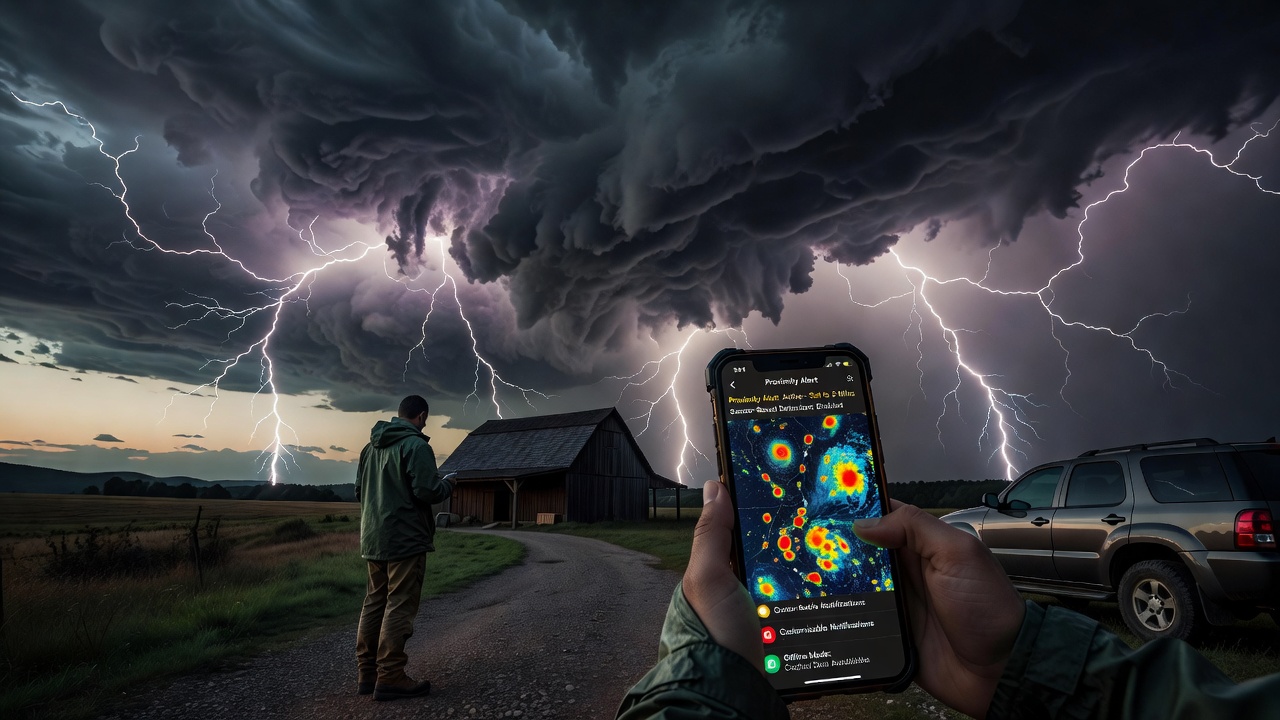
A single bolt of lightning can heat the surrounding air to temperatures hotter than the surface of the sun, and it travels faster than you can blink. That kind of raw physics is why storm tracking has become a genuine consumer category rather than a niche interest for meteorology hobbyists. People check radar apps the way they check traffic before a commute, and for good reason: lightning is unpredictable, fast-moving, and dangerous even miles from where rain is falling.
This is exactly why lightning storm reviews have multiplied across app stores and weather forums over the past few years. Readers want to know which tools actually detect strikes in real time, which ones drain battery life without adding value, and which ones are built on legitimate atmospheric data rather than recycled radar loops. Interestingly, the word "lightning storm" also shows up in entertainment contexts - for anyone curious about that angle, a lightning storm review of the popular slot game covers a completely different kind of thrill, though the naming overlap is a fun coincidence worth noting before we get back to the weather side of things.
What follows is a practical breakdown: the best lightning storm tracking tools available right now, how to read a lightning storm weather forecast without misinterpreting the data, and the safety habits that actually reduce your risk during a storm. None of this is theoretical. It's the kind of information that changes what you do in the fifteen minutes before a storm hits your area.
Understanding Lightning Storms: The Basics
Before evaluating any app or safety protocol, it helps to understand what's actually happening inside a thunderstorm cloud. Lightning forms when charge separation inside a cumulonimbus cloud becomes extreme enough that the atmosphere can no longer act as an insulator. The result is a discharge - sometimes cloud-to-cloud, sometimes cloud-to-ground - that releases an enormous amount of energy in a fraction of a second.
How Lightning Forms
Convective storms build through rising warm air, which carries moisture upward until it condenses and freezes at altitude. Ice particles and graupel collide inside the cloud, and these collisions strip electrons, creating a negative charge near the base of the cloud and a positive charge near the top. When the voltage difference becomes large enough, a channel of ionized air - a lightning bolt - bridges the gap.
Types of Lightning Storms
Not all storms behave the same way, and recognizing the type helps you judge risk more accurately.
- Single-cell storms: short-lived, localized, often less severe but can still produce dangerous strikes
- Multi-cell clusters: groups of storms that regenerate, extending the duration of lightning risk
- Supercell storms: rotating updrafts capable of producing intense, sustained lightning activity along with hail and tornadoes
- Squall lines: fast-moving bands of storms that can bring lightning across a wide area in a short window
Why Lightning Is More Dangerous Than People Assume
Lightning doesn't need rain to strike. Bolts can travel horizontally for several miles before touching down, which is why people are sometimes struck under clear skies at the edge of a storm system. This single fact underpins nearly every safety guideline that follows later in this piece.
Lightning Storm Reviews: What Makes a Good Tracking App
Not every weather app is built for lightning specifically. General forecast apps focus on temperature and precipitation, while dedicated storm-tracking tools prioritize strike detection, proximity alerts, and real-time mapping. When evaluating lightning storm reviews, the distinction matters more than most users realize.
Real-Time Strike Detection Accuracy
The best lightning storm apps rely on networks of ground-based sensors that detect the electromagnetic pulse from each strike, triangulating its location within seconds. Accuracy depends on sensor density in your region - coverage is generally stronger in populated areas and weaker in remote regions, which affects how reliable an app's alerts will be depending on where you live.
Alert Customization and Notification Speed
A tracking app is only as useful as its alert system. Look for apps that let you set a custom radius - five miles, ten miles, twenty - so you're notified before a storm reaches you rather than after. Notification lag matters too; an app that reports a strike a full minute after it happened offers little practical value during a fast-moving storm.
Data Sources and Transparency
Reliable apps disclose where their data comes from, whether that's a proprietary sensor network, a partnership with a national weather service, or crowd-sourced satellite data. Transparency here is a strong signal of quality, since vague sourcing usually means the app is repackaging someone else's radar feed with added latency.
Best Lightning Storm Tracking Tools Compared
Choosing among tracking tools comes down to matching features to your actual needs - a hiker in open terrain has different priorities than someone monitoring storms from a home office.
Apps Built for Outdoor and Field Use
These prioritize GPS-based proximity alerts, offline maps, and battery-efficient background tracking, since users are often away from reliable cell coverage when storms roll in.
Apps Built for Home and Regional Monitoring
Designed around dashboards and wide-area radar, these tools suit users who want a broad view of storm systems approaching their town or region rather than pinpoint strike locations.
Free vs. Paid Lightning Tracking Options
Free versions typically offer delayed alerts and limited map detail, while paid tiers unlock live strike overlays, extended forecast ranges, and ad-free interfaces. For anyone who spends significant time outdoors during storm season, the paid tier is usually worth the cost difference.
Lightning Storm App Review: Features That Matter Most
A proper lightning storm app review should go beyond star ratings and examine functional details that affect real-world safety.
Interface Clarity During High-Stress Moments
When a storm is bearing down, users need information instantly, not buried in menus. The best interfaces display distance-to-strike and time-to-impact estimates on the main screen without requiring extra taps.
Battery Consumption and Background Tracking
Continuous GPS and radar polling drain batteries fast. Apps that offer adjustable polling intervals let users balance battery life against alert frequency, which matters most during multi-hour storm events or extended outdoor trips.
Offline Functionality
Cell service often degrades during severe weather, so apps with cached radar data and offline strike logs provide a meaningful safety advantage over those requiring constant connectivity.
How to Read a Lightning Storm Weather Forecast
A lightning storm weather forecast isn't the same as a rain forecast, and misreading one for the other leads to poor decisions.
Understanding Probability Percentages
A 40% chance of thunderstorms doesn't mean 40% of the area will see lightning - it means there's a 40% probability that any given point in the forecast zone will experience a storm. This distinction changes how you should plan outdoor activities.
Reading Radar and Strike Density Maps
Dense clusters of strike markers on a map indicate active, high-frequency lightning cells, while scattered single markers often represent weaker, dissipating activity. Learning to distinguish the two helps you judge whether a storm is intensifying or fading.
Timing Windows and Storm Movement
Forecasts typically include estimated arrival and departure times based on storm speed and direction. Cross-referencing this with live tracking data gives a far more accurate picture than relying on either source alone.
Lightning Storm Safety Tips: Before, During, and After
Technology helps you see a storm coming, but survival ultimately depends on behavior. These lightning storm safety tips apply regardless of which app or forecast you're using.
Before the Storm Arrives
- Check a lightning storm weather forecast at least an hour before planned outdoor activities
- Identify sturdy shelter - a fully enclosed building or hard-topped vehicle - before you need it
- Charge devices in advance in case power or connectivity drops during the storm
During Active Lightning
- Follow the 30-30 rule: if thunder follows lightning within 30 seconds, seek shelter immediately, and wait 30 minutes after the last thunderclap before going back outside
- Avoid open fields, tall isolated trees, metal fencing, and bodies of water
- Stay away from plumbing and corded electronics indoors, since lightning can travel through wiring and pipes
After the Storm Passes
Lightning can still strike after visible rain has stopped, which is why waiting the full thirty minutes matters more than watching the sky clear. Check tracking apps to confirm strike activity has genuinely moved beyond your radius before resuming outdoor plans.
Frequently Asked Questions
What's the most reliable way to know if lightning is close enough to be dangerous?
Use the 30-30 rule alongside a real-time strike-tracking app. Counting seconds between lightning and thunder gives a rough distance estimate, but an app with sensor-based detection is far more precise, especially when strikes are happening outside your visual range.
Can lightning strike without any rain falling?
Yes. Lightning can travel horizontally for miles from the parent storm cloud, striking areas under clear skies. This is sometimes called a "bolt from the blue" and is one of the main reasons safety guidelines recommend seeking shelter well before rain arrives.
Do lightning tracking apps work without an internet connection?
Some do, particularly those designed for outdoor and backcountry use, which cache radar data and store recent strike logs locally. Apps built primarily for home monitoring usually require an active connection for live updates.
Is it safe to use a phone during a lightning storm?
Using a mobile phone itself carries no meaningful electrical risk, since it isn't wired to anything conductive. The danger comes from your physical location, not the device, so checking a lightning storm app while sheltered indoors is perfectly safe.
How accurate are strike-distance estimates on tracking apps?
Accuracy depends on sensor density in your region. In well-covered urban and suburban areas, estimates are typically precise within a small margin, while rural or remote regions may show slightly delayed or less exact readings due to sparser sensor networks.
What should I avoid touching or standing near during a storm?
Stay away from metal fences, plumbing fixtures, corded electronics, open water, and tall isolated objects like single trees or poles. All of these can conduct or attract an electrical charge during nearby strikes.